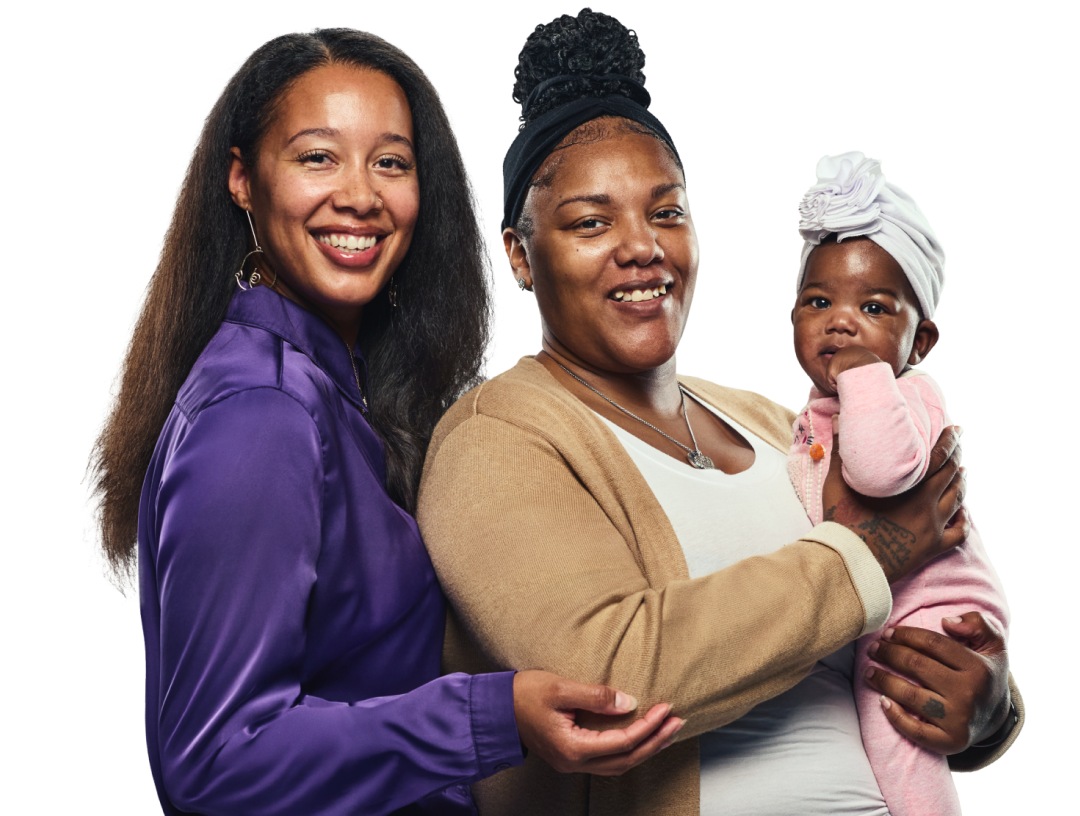
Doulas provide presence, peace of mind, and protection, throughout pregnancy, labor and delivery, and postpartum. Numerous studies show that birthing people with doula support experience greater satisfaction with their care and are less likely to experience complications, less likely to have low-birth-weight babies, and more likely to initiate breastfeeding.1
What is a doula?
Doulas are trained professionals who support birthing people before, during, and after their birth.
A doula’s job is to support your voice, your choices, and your whole experience.
Doulas work alongside your doctors, nurses, and midwives, they do not replace them.
Who are doulas for?
Doulas are for birthing people of all identities.
They support people giving birth in hospitals, homes, and birth centers.
Doulas are especially powerful in communities facing racism, medical bias, and birth inequities. In fact, doula care is associated with improved maternal and infant health, medical benefits, and cost savings.1
People with doula support are more likely to:
Feel in control of their birth experience.
Bond well with their baby.
Recover more confidently after birth.
A doula will help you feel:
Heard
Cared For
Respected
Not Alone
There are many ways to pay for doula care.
In some cases you may not need to pay anything at all. Doulas may be covered by your health insurance, depending on your state and plan.
Before your birth
Health insurance often covers prenatal visits and planning with your doula.
During labor and delivery
You may be able to have your doula with you at the hospital or birthing center.
Postpartum
Postpartum check-ins, breastfeeding support, and emotional care can be covered, too.
Here are other ways doula care can be affordable.
Talk to your healthcare provider about affordable doula services or use the resources linked at the end of this page to learn more.
Sliding scale options
Many doulas offer flexible pricing based on your income. You pay what you can.
Community-based programs
Local doula collaboratives, nonprofits, and health centers often connect families with free or low-cost support, especially for those navigating systemic barriers.
Grant-funded or volunteer doulas
Some doulas provide lower cost care through grants or community programs designed to expand access in Black, Brown, Indigenous, and LGBTQ+ communities.
Birth justice organizations
Groups led by doulas of color may offer culturally rooted support at no cost, supported by donations or funders committed to equity.
They talk through your hopes, your worries, and what you want to happen, so you feel ready and in control. This matters. Doula users had a 29% lower risk of preterm birth compared with those without doula care.2
Stay by your side during labor
While hospital staff may come and go, your doula stays in the room with you. They’re your steady support through every contraction and every choice.
Offer emotional support
Whether it’s a kind word, a calming touch, or just someone who really listens—your doula is there for you. They also help your partner, grandparents, and chosen family feel included, calm, and confident.
Visit postpartum
They check on you—not just the baby. Doulas help you rest, heal, and adjust in those first weeks at home.
Deliver babies
That’s your doctor or midwife’s job. Doulas support you through it, but they don’t do anything medical.
Replace your OB or midwife
They work alongside your medical team, not instead of them. While hospital staff may come and go, your doula stays in the room with you. They’re your steady support through every contraction and every choice.
Make medical decisions
A doula won’t tell you what to do. But they’ll help you understand your options and speak up for what you want.
Judge your choices
However you choose to give birth (medicated or unmedicated) or feed your baby (breastfeeding or bottle-feeding), they’re with you, not against you. They also don’t push a specific birth plan or parenting style.
What you might be wondering about doula care.
What is a doula, really?
A doula is a trained support person who’s with you during pregnancy, birth, and postpartum. They don’t replace doctors or midwives. They stay by your side the whole way, offering emotional, physical, and informational support.
Do doulas deliver babies?
Nope. That’s your doctor or midwife’s job. Doulas don’t do anything medical.
How much does a doula cost?
It depends on where you live. You might not have to pay anything at all. Health insurance, like Medicaid, covers doulas in many states, and some doulas offer low-cost or sliding-scale options.
Can I have a doula if I’m giving birth in a hospital?
Yes. Doulas support you no matter where you give birth—hospital, birth center, or home. Many hospitals welcome doulas as part of your support team.
Can I still have a doula if I already have a doctor or midwife?
Absolutely. Your doctor or midwife handles your clinical care. Your doula is there for you, your feelings, you voice, and your choices. They work together as part of your support system.
Are doulas only for moms?
Nope! Doulas are for birthing people of all genders and family structures. They also support partners, grandparents, and anyone in the room.
What do doulas do after the baby comes?
They check in. They remind you to rest. They help with feeding, healing, and those “am I doing this right?” moments. Postpartum support matters. Doulas don’t disappear after delivery.
How do I know if a doula is right for me?
If you want someone who listens, who stays, and who sees the whole you—not just your chart—a doula might be the support you didn’t know you needed. If you’re pregnant, or even just thinking about it, and wondering:
Who’s going to be there with me?
Will anyone explain things in a way I understand?
What if I just need someone in my corner?
Then yes, a doula is for you. Because doulas are for every body.
Real stories of real support.
Every birth is different. But one thing stays the same: the power of having someone by your side. These are stories from real doulas and how they help people feel stronger, safer, and more seen.
Before
Phyllis Sharp discusses what she does with her clients before delivery.
During
Adriana Lozada talks about what she provides during labor.
After
LaKeisha Washington talks about what she provides for post-partum care.
Before
Phyllis Sharp discusses what she does with her clients before delivery.
During
Adriana Lozada talks about what she provides during labor.
After
LaKeisha Washington talks about what she provides for post-partum care.
How to find a doula you connect with.
Whether you’re just starting to explore your options or already deep in planning, the key is finding someone who understands your story, honors your choices, and helps you feel safe and supported.
Questions to Ask When Choosing a Doula
These questions can help you get a feel for whether a doula is a good fit for your needs, values, and comfort.